A tale of drivers and decision makers.
When you first look at a brand website, you'll often find content that's “grown” over the years, but you'll might also discover marketing theories that might be worth questioning to see if they still apply. In the case of Mercedes-Benz Trucks, we found that they split their target audience into two groups. The supposed decision-makers (such as fleet managers) are addressed formally and politely, while drivers are addressed in casual marketing language and on a first-name basis. This dichotomy creates one thing above all else: inconsistency.
From organizational to customer centricity.
Our goal in strategically preparing for the relaunch was to develop a brand website dedicated to the real needs of our customers. That's why we took a close look at our existing structure and communication during the analysis phase.
When looking at the structure of the website, a familiar pattern quickly becomes apparent: the main navigation creates a comprehensible order, especially for the brand, by reflecting the organizational logic. This can be easily countered by addressing actual user needs and developing concrete journeys that enable users to reach their individual goals. In addition to creating significantly simplified navigation structures, we primarily developed teaser elements that enable more intuitive navigation and reduce the need for active navigation using the main menu.
During intensive engagement with different target groups and actual user interviews, something surprising quickly became apparent: drivers and business decision-makers are much closer to each other than expected, because drivers are actively involved in purchasing decisions even in large logistics companies, and fleet managers are often still truckers at heart themselves.
A new design for a new era of vehicles.
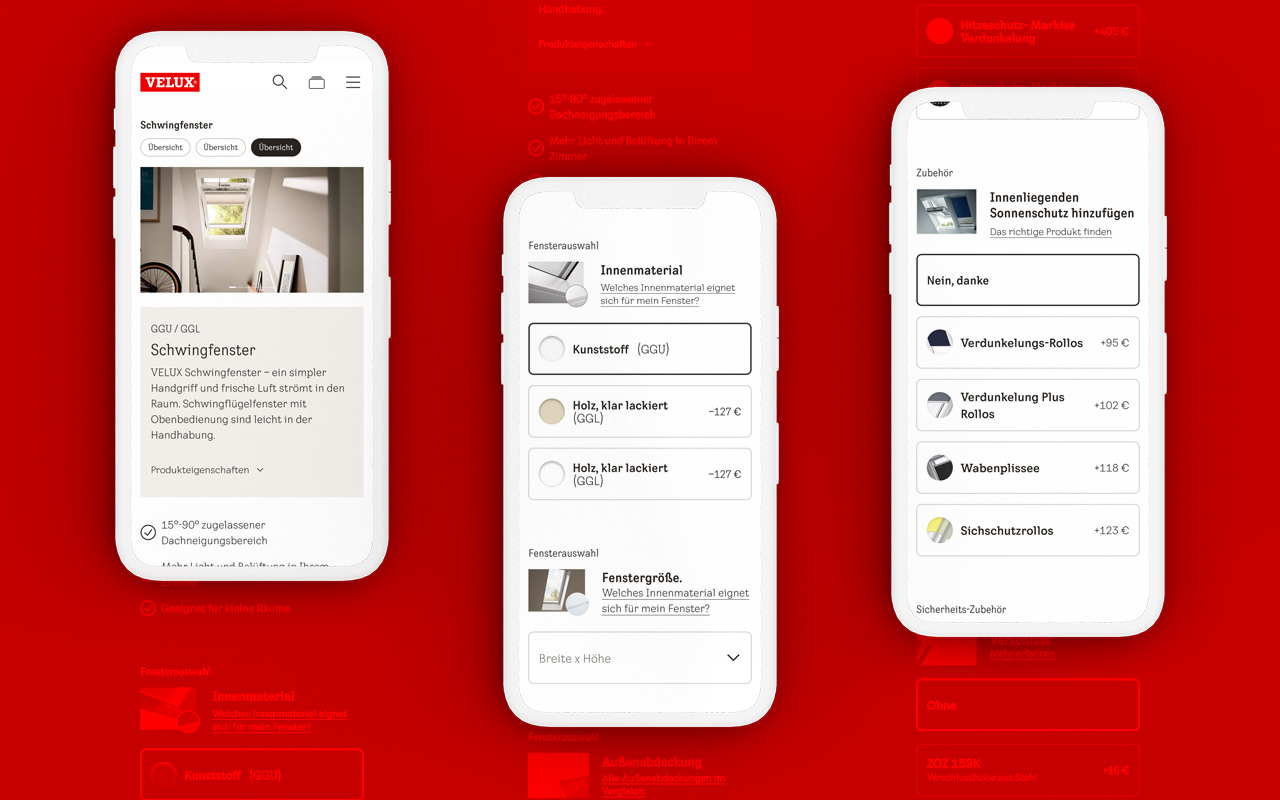
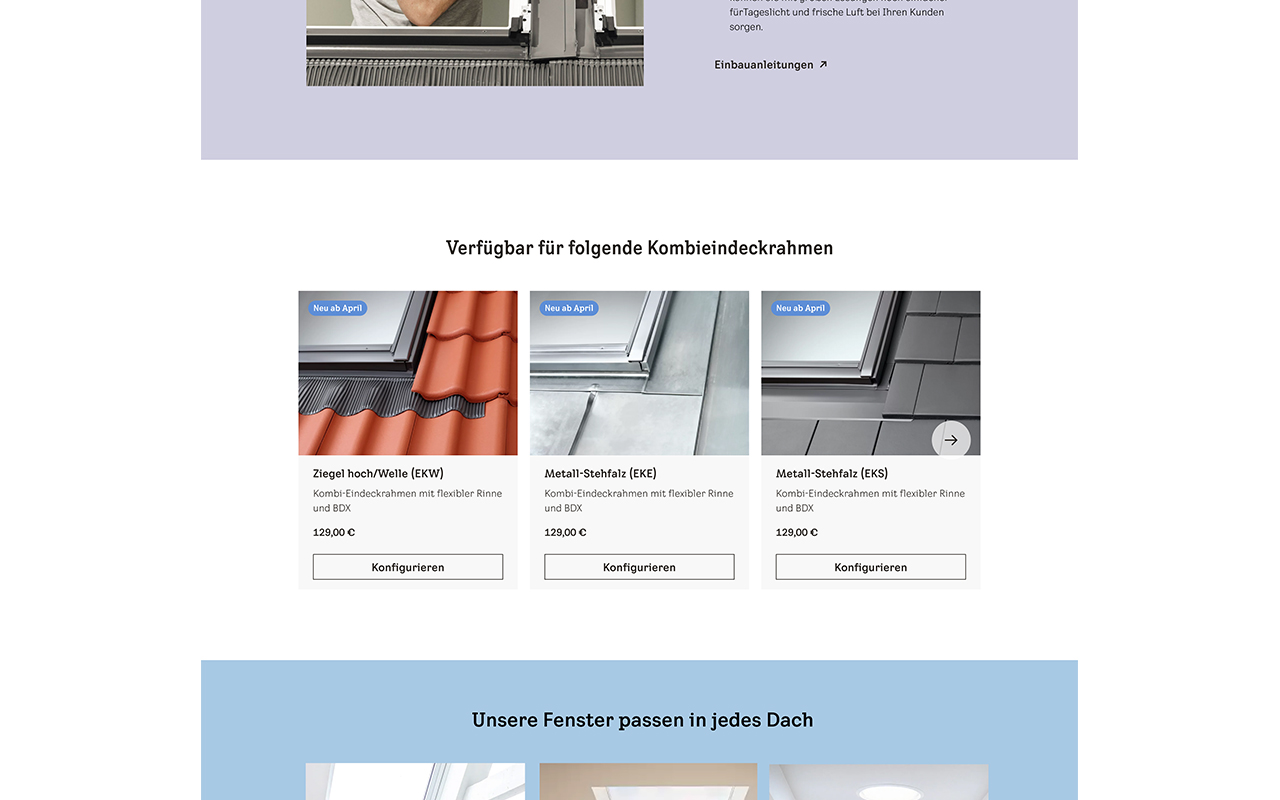
Of course, a relaunch also involves a redesign. Early on in the project, we tried out different approaches in a large-scale design exploration, developed new styles, and gave the brand, which had previously been characterized by a predominantly black website, a modern look with fresh, new elements and more white space. New interactive modules enable a novel approach to discovering products and product features, which is a significant advantage, particularly in relation to entering the e-era with the eActros 600.
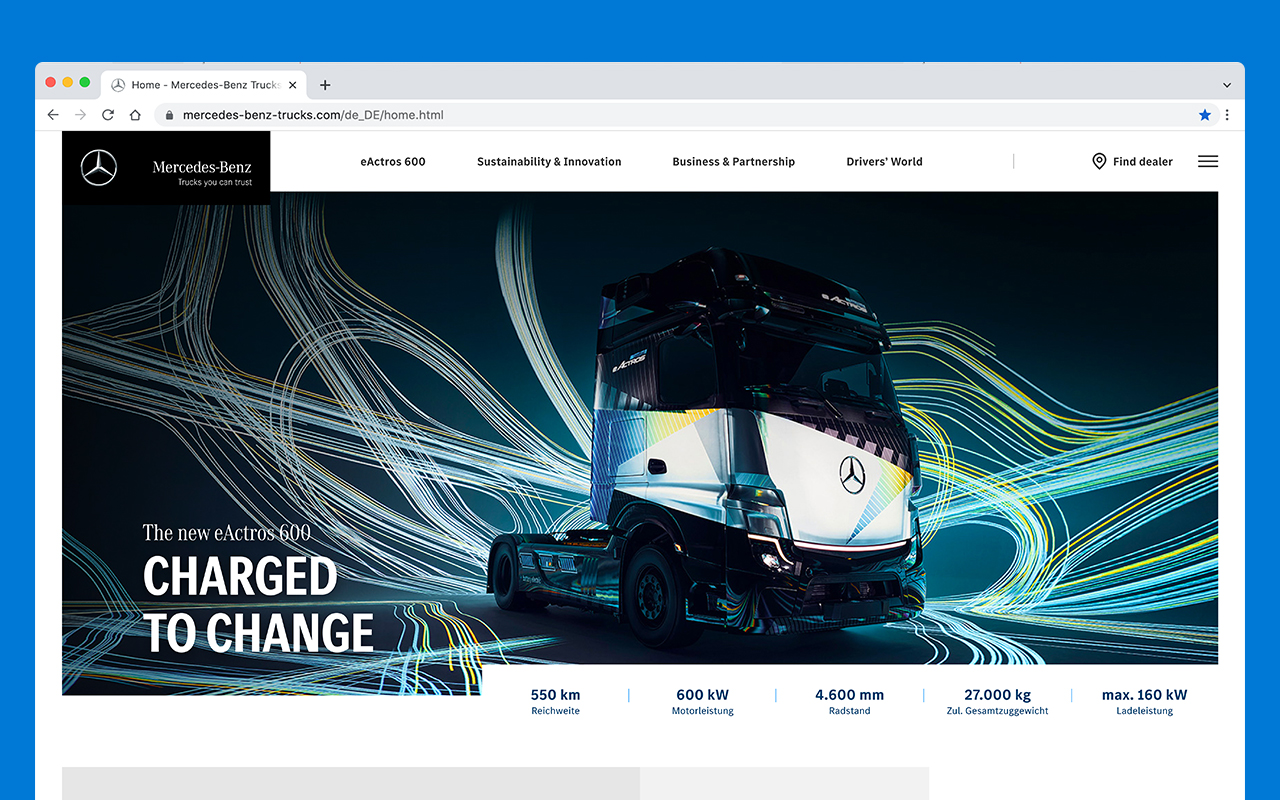
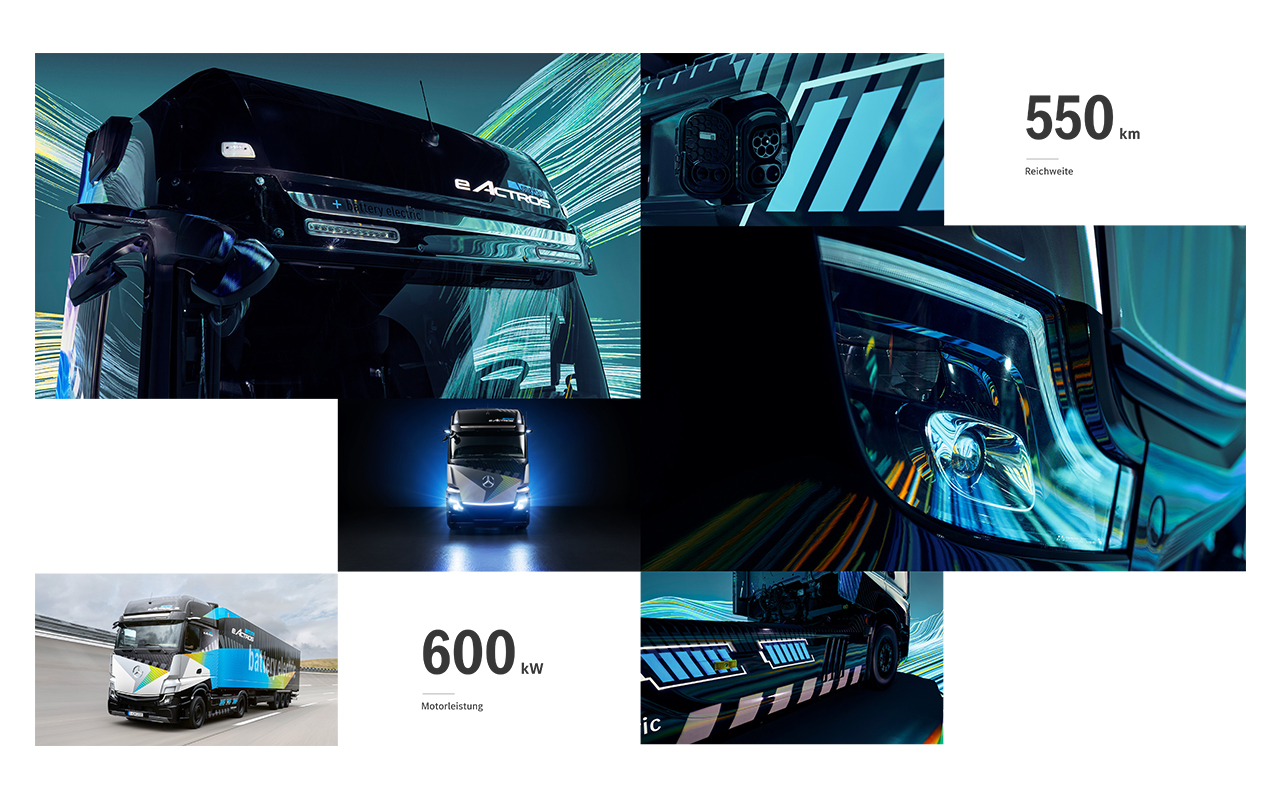
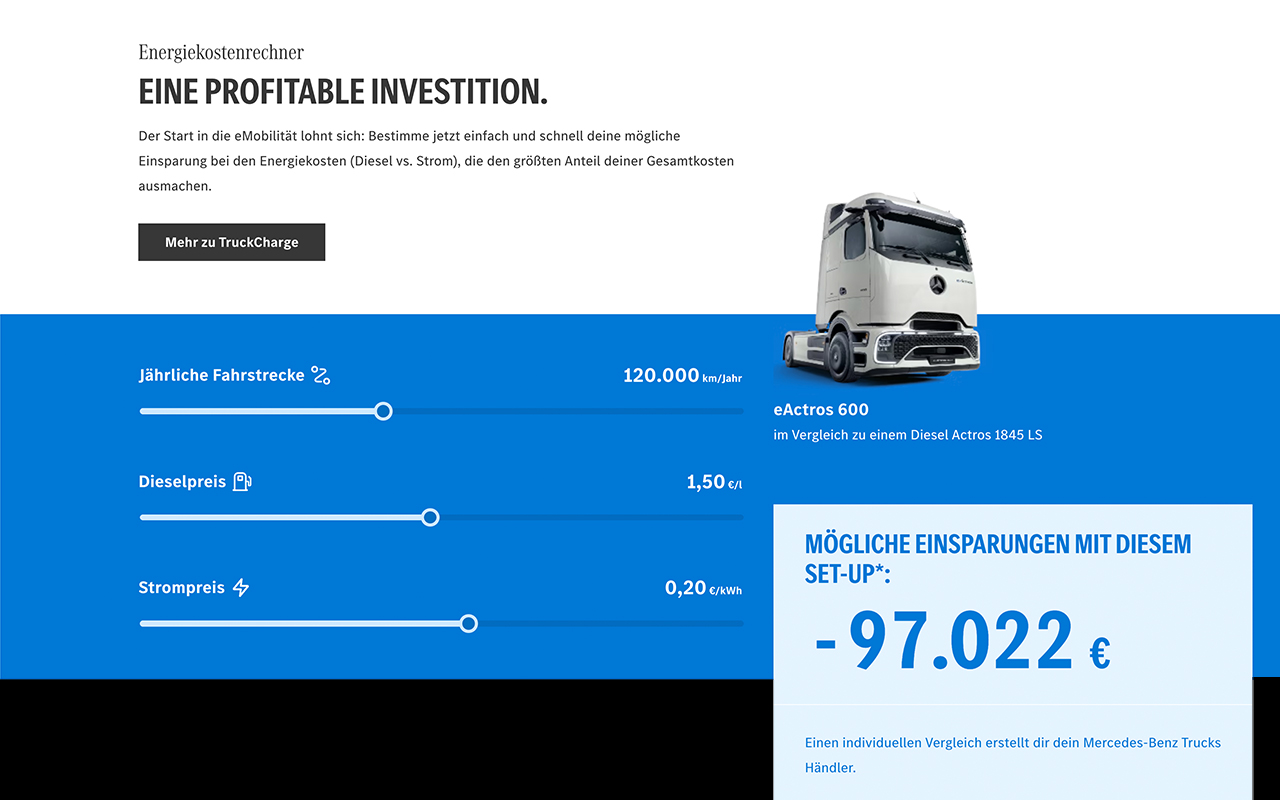
Please do not change anything in the content, except everything.
When reorganizing the content, we were instructed at the start of the project to change as little as possible. The marketing team's goal was to retain as much content as possible and rewrite as little copy as possible. It's not something you like to say in a project context, but this part of the briefing failed spectacularly.
After we had convinced all of the group's stakeholders of the groundbreaking design, new customer journeys, interactive modules, and bold imagery, there was a quick desire to also move closer to the target group in terms of language.
In a brand language workshop, we discovered that Mercedes-Benz Trucks had previously communicated in a very marketing-heavy way, using lengthy texts that did not reflect the natural language of their target group and focused primarily on the company itself. Here, too, we initiated a change of perspective and focused on communicating the benefits to customers. And we adjusted another, not insignificant detail. The brand now addresses all customers informally on a first-name basis, giving it a much more relaxed and approachable image across the board. A real win, especially for our customers.
The Brand Hub as a living touchpoint.
In the two-year relaunch project, we not only gave the site a significant update, but also developed new processes together with the client, e.g., with regard to site editing. This ensures that the newly created communication spaces are used effectively on a long-term basis and engage customers with current topics.
I provided the customer with an interdisciplinary team led by a strong product owner, which also offered strategic UX expertise and innovative UI design. The technical implementation was carried out with Mercedes-Benz Trucks' existing technology partner.
During the project, my personal task was primarily to manage stakeholders and bring about decisions at a higher management level.
Even after the successful relaunch, we continue to support the customer at a strategic level on a selective basis, with me acting as the strategic contact and source of inspiration for the decision-makers.